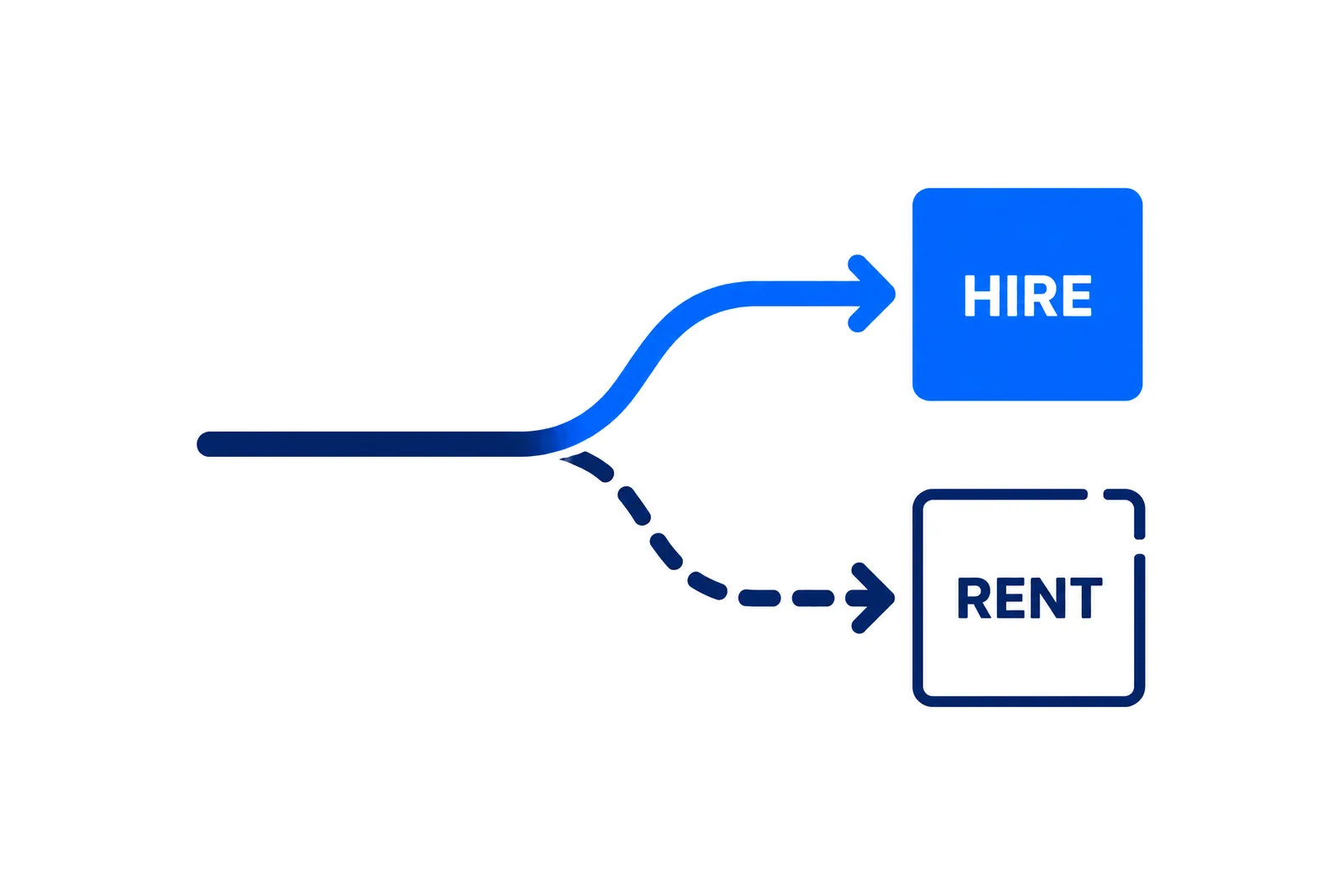
There is a stage most small businesses reach where technology stops being somebody's side task and starts being nobody's job.
The website needs decisions. Three vendors need managing. Someone has to decide whether the new system is worth it. The owner has been doing this in the evenings, badly, and resenting it. The obvious answer is to hire someone. Frequently that is the wrong answer, and the reasons have nothing to do with money.
The real question is not cost
Everyone frames this as a budget comparison. A full-time technical hire versus a few hours of consulting. But the numbers are only the visible part.
The actual question is: how much of this work is decisions, and how much is doing?
Decisions are episodic. Should we move hosts. Is this contract reasonable. Do we build or buy. Why is this project late and is the explanation credible. These arrive in bursts, they need experience rather than hours, and between them there is nothing to do.
Doing is continuous. Someone has to actually run the thing, respond when it breaks, work through the backlog, be reachable.
Get this ratio wrong in either direction and you waste money.
When hiring is right
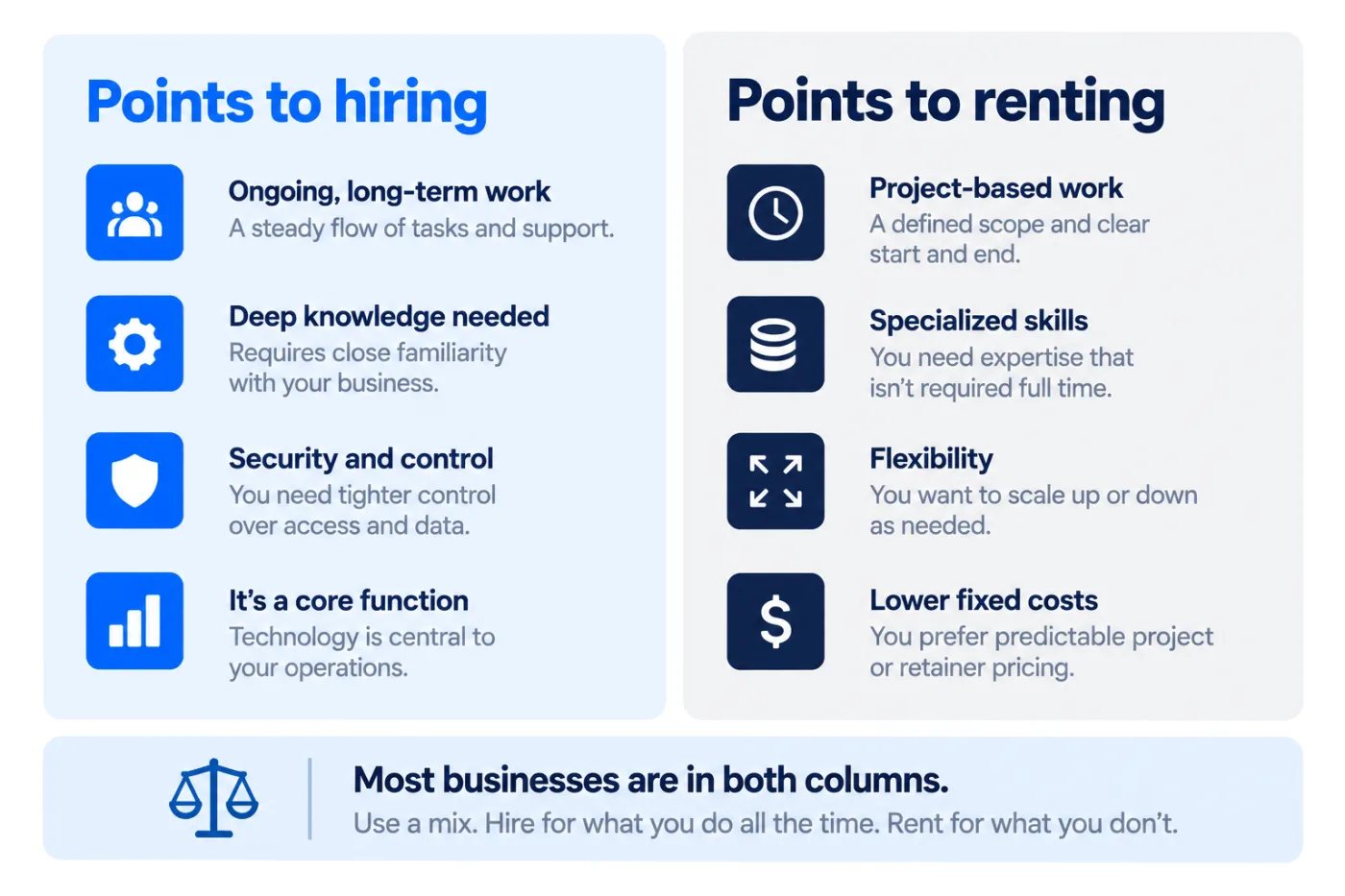
The work is continuous and someone is already drowning in it. If a person on your team spends fifteen hours a week on technology and it is not their job, you already have a role. You are just not paying for it properly and you are getting an unhappy employee.
It needs deep context you cannot transfer. Some businesses have genuinely idiosyncratic operations. Learning them takes months. That knowledge is worth having inside.
Availability is the product. If systems going down costs you money by the hour, you need someone whose job it is to be there.
There is a real career in it. This is the one people skip, and it is the reason most small business technical hires fail. A good person needs somewhere to go. A role with no progression, no peers and no technical leadership above them will attract someone who cannot get a better job, or lose someone who can within eighteen months.
When renting is right
The work is bursty. Several months of intensity, then quiet. You cannot hire a fraction of a person, but you can buy a fraction of their time.
You need judgment more than hours. Reviewing a proposal, sanity-checking a vendor's estimate, deciding between two architectures. These take a few hours and benefit enormously from someone who has seen it go wrong before.
You do not know what you need yet. Hiring requires you to write a job description. If you cannot describe the role with confidence, you are not ready, and hiring the wrong person is far more expensive than a few months of advice while you work it out.
You need someone to manage the people doing the work. Frequently the gap is not building, it is the person between you and the builders who can tell whether the answers you are getting are good. That is a part-time function almost by definition.
The trap in both directions
Hiring one person and calling it a department. You hire a developer and then ask them to also manage vendors, negotiate contracts, run security, handle support and make architecture decisions. These are different skills. Almost nobody has all of them, and the ones who do are not available at a small business salary.
Renting forever without transferring anything. An advisor who becomes permanently load-bearing has failed. If after a year nobody internally understands your systems any better and every question still routes through an outsider, that is a dependency, not a service. Any arrangement should be making itself less necessary.
The honest middle
For most businesses under about fifty people, the answer is usually not one or the other.
It is a modest amount of senior judgment, bought in regularly, sitting on top of whoever is actually doing the work: an agency, a freelancer, a capable internal generalist. The advisor is not building. They are deciding what should be built, checking the quality of what comes back, and making sure the person doing the work is set up to succeed.
That arrangement is cheaper than a hire, faster than an agency, and it fails in the specific way described above if nobody is watching for it.
How to tell which one you need
Track it for a month. Genuinely write it down.
Every time a technology thing needs attention, note whether it was a decision or a task, and roughly how long it took.
At the end of the month, add it up.
- Mostly tasks, more than fifteen hours a week: you need to hire.
- Mostly decisions, a handful of hours: you need advice, not a person.
- Heavily both, sustained: you need to hire, and you need help writing the job description, because the role you are imagining is probably two roles.
This takes a month and costs nothing, and it is dramatically more reliable than deciding based on how the last bad week felt.
The failure nobody plans for
Whichever way you go, ask the same question: what happens when this person is not here?
For a hire, that is a holiday, a resignation, an illness. For an advisor, it is the end of the engagement.
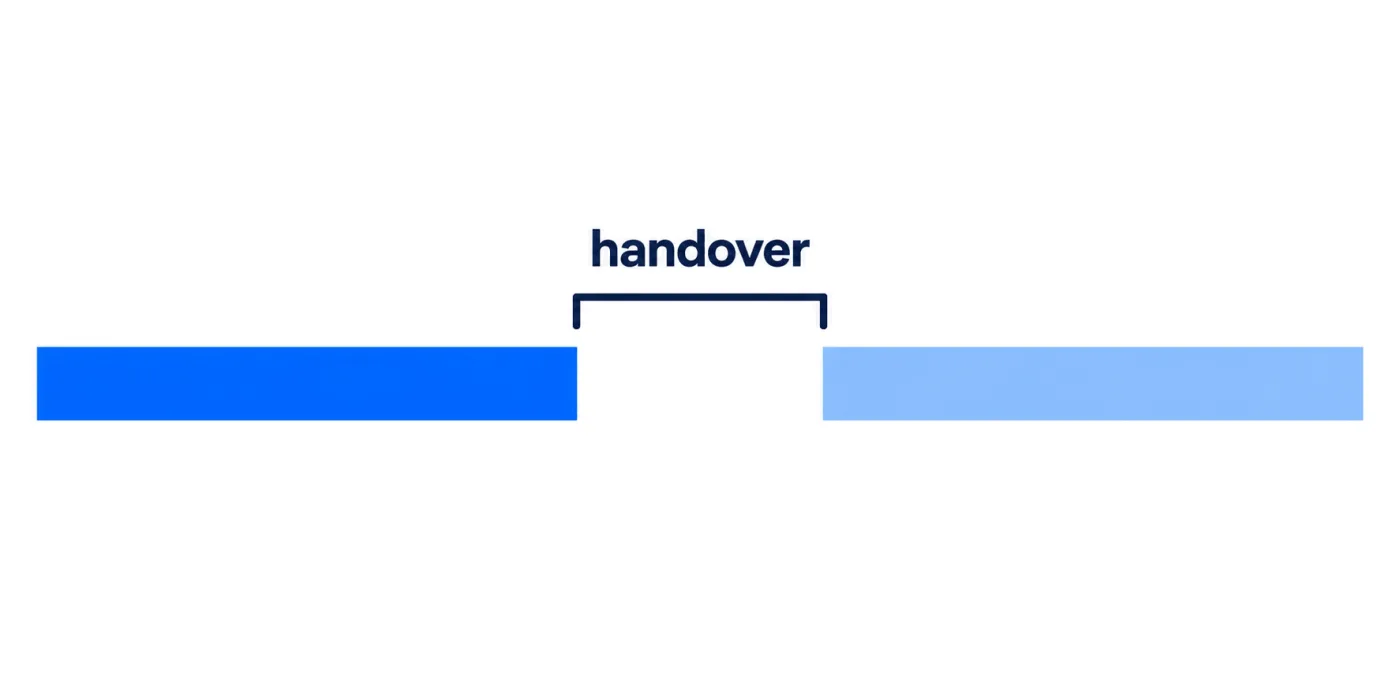
If the answer in either case is that everything stops, the problem was never staffing. It was that the knowledge lives in a person instead of somewhere you can reach it. Documentation, account ownership in your own name, and a written record of why things are the way they are.
That is the part that survives both a resignation and a contract ending, and it is the first thing to get dropped when everyone is busy.
The short version
Count decisions against tasks for one month. Tasks mean hire, decisions mean rent, and both mean you need to write the job description carefully. Either way, make sure the knowledge ends up somewhere other than one person's head.
If a few hours of senior judgment a month is the shape that fits, that is what Technology Advisory is. If it is not, I would rather tell you that than sell you a retainer you do not need.