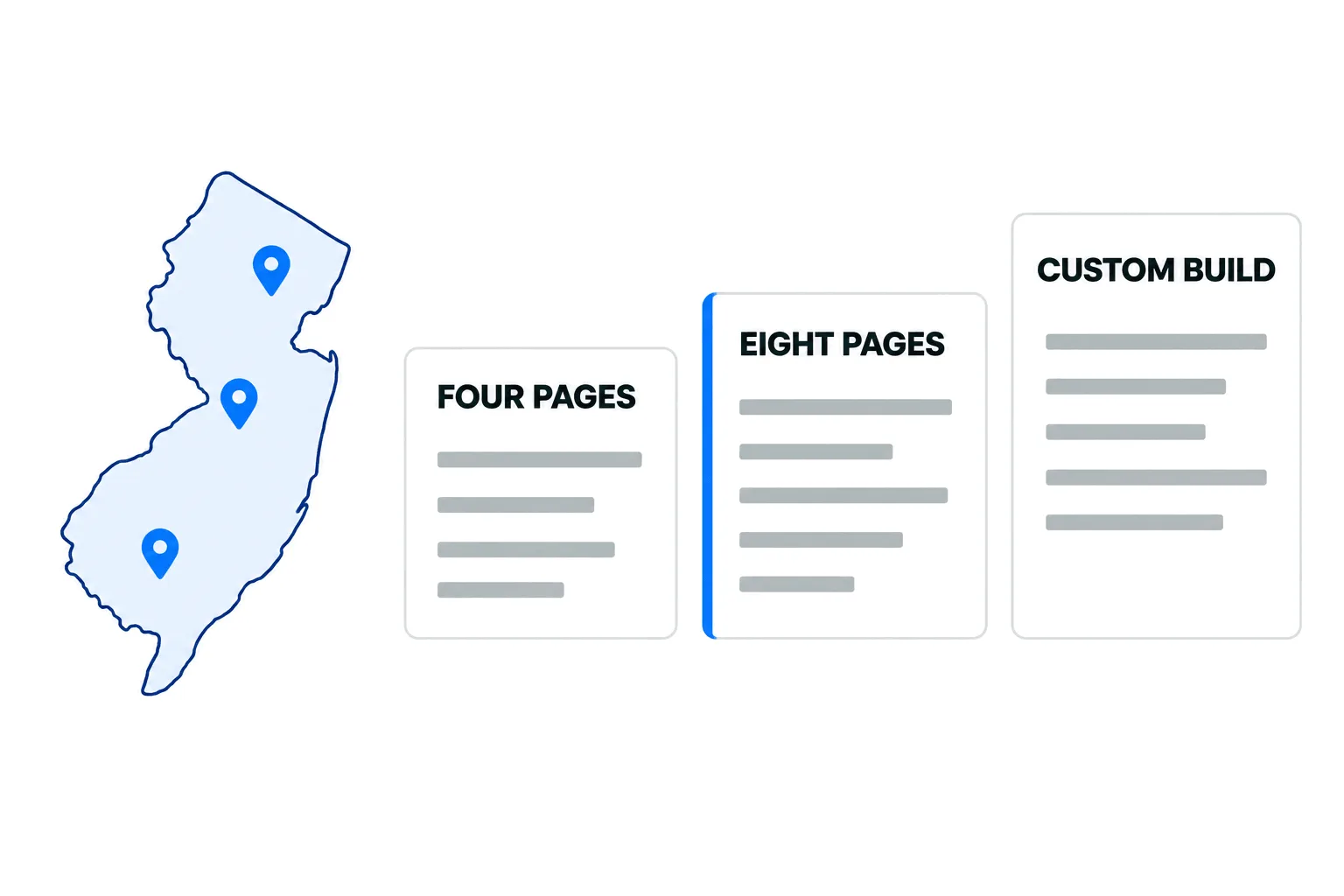
Almost everyone searching for a web designer in New Jersey types a town into the box. Oceanport. Oakhurst. Manville. Fairton. That instinct is right, and it is also where most of the bad decisions start, because the list you get back is sorted by who spent money on being found, not by who would do good work for you.
I have built and rescued enough small business sites in this state to know what separates a project that goes well from one that quietly costs three times what it should. Almost none of it is about design taste. It is about scope, pricing structure, and what happens after launch.
What a website actually costs in New Jersey
There is no single number, but there are bands, and knowing which band you are in tells you more than any portfolio.
- Under $1,000. A template, lightly configured, usually by one person moving fast. This is fine for a brochure site that needs to exist and nothing more. It is not fine if the site has to bring in work.
- $1,000 to $5,000. The range most small businesses belong in. A small number of pages, written properly, on a theme or framework that will not fight you later. Basic SEO, a working contact form, analytics that record something useful.
- $5,000 to $20,000. Custom design, more pages, integrations, ecommerce, or a business with real complexity to represent. Worth it when there is something genuinely custom to build.
- Above $20,000. Agencies with account managers and process. Sometimes exactly right. Usually not for a business with under twenty employees.
The trap is not the top of that list. It is the bottom. A $600 site that has to be rebuilt in fourteen months cost more than a $3,000 site that did not.
Cheap is a scope decision, not a discount
When someone advertises affordable web design, they are almost never offering the same thing at a lower price. They are offering less of it. That can be a completely sensible trade, but you should know which parts you are trading away.
The parts that usually get cut first, in order:
- Writing. The single most expensive thing on a website and the first to be replaced with filler that reads like everyone else in your industry.
- Real photography, replaced with stock that your competitors also bought.
- Anything invisible: page speed, structured data, redirects from the old site, a form that actually sends email.
- Post-launch attention. Updates, backups, security patches, and the small fixes that surface once real people start using the thing.
None of those show up in a mockup. All of them show up eighteen months later.
Responsive is not a feature any more
Every serious tool in 2026 produces a site that reflows on a phone. If a proposal lists responsive design as a bullet point, it is padding. What still varies enormously is whether anyone tested the site on a phone with real content in it.
Ask to see a live client site on your own phone before you sign. Not a screenshot. Load it on cellular data, in daylight, and try to do the thing a customer would do. Tap the phone number. Fill in the form. Zoom in on a photo. Sites that look fine in a desktop mockup and fall apart in that thirty second test are extremely common.
What good UX means for a small business
The phrase gets used to mean visual polish. It is more boring and more useful than that. For a small business site it comes down to four things:
- A visitor can tell what you do within a few seconds of landing on any page, not just the home page.
- The action you want them to take is obvious and available without scrolling to the bottom.
- Your phone number, service area and hours are on the page, in text, not baked into an image.
- Nothing important is hidden behind a hover, a carousel, or a menu that needs two taps.
If a designer walks you through those before showing you colors, that is a good sign.
How to read a proposal
A scope is worth more than a portfolio. Portfolios show you the best work someone has ever produced, usually with a budget you do not have. A scope shows you what you are buying.
A proposal that will not surprise you later says, in writing:
- The exact number of pages, and who writes the words on them.
- What happens to your existing URLs. If you have an existing site with any search traffic at all, this line is the difference between keeping it and starting from zero.
- Who owns the site, the domain, and the accounts when the work is done.
- What the site is built on, and whether you could hand it to a different developer.
- What is included after launch and for how long, and what it costs after that.
- The number of revision rounds, and what counts as a revision.
If those six things are not in the document, they are not in the deal.
Questions worth asking before you sign
Most of these take a designer under a minute to answer, and the answers tell you a lot.
- What platform will this be on, and why that one for my situation?
- Can I edit the pages myself afterwards? Show me what that looks like.
- What do you need from me, and when? The honest answer usually involves more of your time than you expect.
- Who hosts it, what does hosting cost, and is that bill in my name?
- What happens if I want to leave in a year?
- Have you worked with a business like mine before, and can I call them?
That last one is the strongest signal available to you and almost nobody uses it. A designer who has done good work locally will hand over a phone number without hesitating.
Local designer or remote
Being in the same county is worth less than it used to be and more than nothing.
Local helps when the work needs someone physically present: photography of your space, staff headshots, meeting a team that would rather talk in a room than on a call. It helps when your business is genuinely local and the person building the site already understands why Asbury Park and Ocean Grove are different markets even though they share a border.
It matters much less for the build itself. Plenty of good work happens over email and a shared document. What you are really buying is responsiveness, and that has nothing to do with distance. A designer twenty minutes away who takes four days to reply is worse than one three states away who answers the same afternoon.
Where local does reliably pay off is search. If your customers are in Monmouth or Ocean County and you want to be found by them, the person building the site needs to understand Google Business Profile, service area pages, and how local results actually get assembled. That is a specific skill, and it is not the same skill as design.
Signs to walk away
- The proposal is a single number with no scope attached.
- You cannot get a straight answer about who owns the domain.
- The monthly fee is required and covers nothing you can name.
- They want the full amount before starting.
- They show you a design before asking a single question about your business.
- The contract has no exit.
The short version
Decide what the site has to accomplish before you talk to anybody. Get the scope in writing. Care more about what happens in month fourteen than about the mockup. And do the phone test.
If you would rather see exactly what a fixed scope looks like before you talk to anyone, my packages list what is included and what it costs, in writing, up front. If that is not a fit, the questions above still work on anyone else you talk to.